
You want a straight answer about HappyHorse AI versus Kling AI. This guide compares both with honest trade-offs. You will see speed wins, price wins, and quality nuances without hype.
We describe typical patterns as of early 2026. You should verify live pricing and features on each vendor’s site before you purchase.
Start with What is HappyHorse AI if you need product context. Compare a different rival in HappyHorse AI vs Sora. See the wider market in best AI video generators in 2026.
Visit the HappyHorse AI home page when you want a quick snapshot of the product before you dive deeper.
EEAT note (how we write)
HappyHorse AI authors this post. We ship a creator platform on happyhorse-turbo.org with HappyHorse-1.0 as our named video model.
We praise Kling where it tends to lead. Speed and value can be real advantages for many teams.
You should run your own prompts. Third-party behavior changes with releases.
Audience
- Creators who compare tools weekly
- Small businesses with tight ad budgets
- Agencies who document stack choices for clients
What we do not claim
We do not claim permanent superiority in every metric. We claim transparent criteria you can reuse.
How to document your own tests
Create a spreadsheet with columns for date, tool, prompt hash, reviewer, score, and failure notes.
Share it with your team. Arguments shrink when data exists.
Pre-flight questions
- What is your aspect ratio?
- What is your delivery deadline?
- Do you need logo-safe pixels?
- Who approves final outputs?
TL;DR: Quick verdict
- Choose HappyHorse AI when you want a unified web workflow, multimodal references, and HappyHorse-1.0 tuned for repeatable campaigns on happyhorse-turbo.org.
- Choose Kling AI when you want aggressive iteration speed, competitive pricing in many regions, and a tool that feels built for rapid short-form output.
Neither tool removes story judgment. You still direct the piece.
If you feel stuck, zoom out. Pick the metric you truly optimize: exploration speed, approval speed, or cost per winner.
One-line memory aid
HappyHorse anchors references. Kling accelerates tries. Your process decides which matters more this week.

Hero comparison highlighting workflow differences between HappyHorse AI and Kling AI.
Snapshot table
| Topic | HappyHorse AI | Kling AI (typical) |
|---|---|---|
| Home base | happyhorse-turbo.org | Kling ecosystem |
| Flagship model | HappyHorse-1.0 | Kling family (e.g., 2.x lines) |
| Strength | Web SaaS + education | Speed + value perception |
| Risk | You must learn our controls | You must manage fast iteration sprawl |
Use the table as orientation. Your brief matters more than a slogan.
Risk snapshot
- Speed risk: Fast iterations can multiply hidden review time.
- Cost risk: Cheap per-try pricing can spike total spend if nobody gates approvals.
- Brand risk: Short-form habits can drift color and identity.
- Ops risk: Without archives, you cannot reproduce a winner.
Visual break: decision checklist
- Do you need archived prompts for compliance?
- Do you need shared references for product shots?
- Do you need fast mood boards above all else?
Answer honestly. The tool should fit the job.
Overview table (compare apples to apples)
| Dimension | What to measure | Why it matters |
|---|---|---|
| Quality | Texture, motion, stability | Drives retention on social |
| Speed | Time-to-first-good-clip | Drives weekly throughput |
| Cost | Credits, subs, overage | Drives margin |
| Controls | Camera, reference inputs | Drives repeatability |
| Safety | Policy fit | Drives legal peace |
Write three bullets for your next deliverable. Let those bullets pick the tool.
Compare the same viewing context
| Context | What breaks first |
|---|---|
| Mobile feed | Micro shimmer and sharpening |
| Desktop hero | Halos and edge crawl |
| Presenter mode | Banding and macro blocks |

Quality comparison should be judged at real viewing size with fair brightness.
Quality comparison across five scenarios
You should test parallel prompts when possible. Keep notes. Memory lies.
| Scenario | Key signal | Typical pain |
|---|---|---|
| A Action | Motion blur believability | Limb jitter |
| B Product | Material honesty | Specular noise |
| C Portrait | Identity stability | Micro wobble |
| D Stylized | Line and color lock | Drift between cuts |
| E Ambient B-roll | Texture stability | Crawling noise |
Scenario A: Fast human motion
HappyHorse AI: HappyHorse-1.0 can handle moderate motion when you describe camera stabilization and wardrobe clearly.
You should add one camera constraint per sentence. Conflicting verbs create mush.
Kling AI: Many users pick Kling for quick motion tests. Speed helps you find a plausible take faster.
You should still slow down for QA. Fast outputs can hide subtle limb errors until broadcast.
Honest call: Kling can win wall-clock time. HappyHorse AI can win when you need disciplined references and shared prompt libraries.
Prompt pattern: “Athlete jogs across frame, handheld micro-shake, shutter 1/120, natural motion blur, stable horizon.”
Scenario B: Glossy product spin
HappyHorse AI: You can anchor reflections with reference stills. Expect to iterate on specular language.
You should describe material in nouns: brushed aluminum, matte plastic, coated glass.
Kling AI: Rapid tries help you explore angles. You may still fight highlights on metal.
You should cap reflections with environment words. Studio sweep lights can behave oddly in AI.
Honest call: Tie on difficulty. The faster tool only helps if your team can evaluate outputs calmly.
Failure mode: Highlights that crawl across curved surfaces. If you see it, simplify lighting words.
Scenario C: Talking-head feel (no real audio capture)
HappyHorse AI: You can guide expression with words and still references. Subtle lip alignment remains a careful review item.
You should avoid extreme close-ups for sensitive messages unless you plan retouch.
Kling AI: Short cycles help you sample expression variants. Review for micro jitter.
You should test audio separately if dialogue must be crisp. Plan ADR when stakes are high.
Honest call: Neither replaces a real shoot for sensitive performances.
Ethics note: Do not imitate real people without permission.
Scenario D: Stylized ad look
HappyHorse AI: HappyHorse-1.0 follows style anchors when you commit to palette nouns and medium nouns.
You should pin a style sheet with hex ranges and forbidden effects.
Kling AI: Quick drafts help art directors explore looks. You must lock style before final delivery.
Speed helps exploration. It does not replace a creative director who says no.
Honest call: Process beats brand names. Choose the stack your team will actually document.
Style lock list:
- Palette max count
- Line weight rules
- Allowed transitions
- Forbidden camera moves
Scenario E: Atmospheric exterior
HappyHorse AI: You can control fog, rain, and light direction with explicit language.
You should specify time of day in one phrase. Mixed sun positions confuse models.
Kling AI: You can iterate fast through weather moods. Watch for inconsistent ground contact.
Puddles and shadows should agree. If they do not, simplify weather stacks.
Honest call: HappyHorse AI suits teams that want stable web governance. Kling suits teams optimizing for throughput.
Location tip: Name one landmark noun, not five. Too many nouns fight for attention.

Motion comparisons should be reviewed at real frame rate, not scrubbed stills alone.
Quality rubric (copy this)
- Lighting believability: 1–5
- Temporal stability: 1–5
- Subject identity: 1–5
- Artifact rate: 1–5 (higher is better)
- Editability: 1–5
Score blind when you can. Brand loyalty distorts scores.
Day-in-the-workflow: speed versus governance
Speed path (often Kling-friendly): You generate many short clips. You pick the best two. You move on.
Governance path (often HappyHorse-friendly): You store prompts, version references, and align reviewers inside a web product.
Honest takeaway: Fast tools can create chaos without naming conventions. Slow tools can fail without iteration budgets.
Collaboration checklist
- Shared prompt doc
- File naming standard
- QA pass at half speed
- Audio check on speakers and earbuds
Two sample schedules (same deadline)
| Hour block | Speed-first team | Governance-first team |
|---|---|---|
| 0–1 | Rapid Kling tries | Shot list + references |
| 1–2 | Pick two directions | HappyHorse-1.0 batch |
| 2–3 | Client review | QA + notes |
| 3–4 | Patch prompts | Patch prompts |
| 4–5 | Export | Export + archive |
Neither schedule is morally better. Pick the one your team can sustain.
Meeting reality without drama
Executives want speed. Legal wants prudence. Creatives want room to explore.
Write decisions in a one-page memo. Link to prompt archives. Disagreements shrink when artifacts exist.
When HappyHorse should lead the stack
Lead with HappyHorse when your org already complains about asset chaos. References and web dashboards reduce thrash.
When Kling should lead the stack
Lead with Kling when your org optimizes for idea count and you have a strong reviewer who can say no.

Character consistency needs references, repeated nouns, and human review.
Feature-by-feature comparison
Resolution and detail
HappyHorse-1.0 targets crisp outputs for modern social sizes. You should test text overlays on real devices.
Kling often emphasizes fast previews. You should confirm final export sizes in-product.
Takeaway: Compare outputs at the size your audience sees.
| Viewing surface | Inspect |
|---|---|
| Phone | Skin texture and micro shake |
| Laptop | Edge halos and compression |
| TV test | Banding in gradients |
Input modes
HappyHorse AI focuses on multimodal references for real campaigns. You can combine assets when your brief is messy.
Kling supports multiple input patterns depending on product version. You should read their current docs.
Takeaway: If references drive your brand, prioritize a workflow that stores them cleanly.

Multimodal inputs reduce guesswork when your brief includes real product assets.
Camera control
You should write explicit camera sentences. Lens names and move speeds reduce surprises.
Kling rewards rapid exploration. You may trade some reproducibility for variety unless you discipline prompts.
Takeaway: HappyHorse AI fits versioned prompt libraries. Kling fits rapid A/B mood boards.
Audio alignment
Audio changes perception of quality. You should decide early whether audio is native or post.
HappyHorse AI workflows aim at creators who mix stems in editors. Plan headroom for dialogue.
Kling outputs may include audio features depending on tier. Verify in your account.
Takeaway: Judge sync with fair monitoring volume. Loud music masks errors.

Audio advantage is about clarity, not loudness. Mix fairly before you judge.
Character and product consistency
Consistency is a production skill. You should lock nouns across prompts.
HappyHorse AI supports reference-led workflows for HappyHorse-1.0. You can version prompts like software.
Kling’s speed can tempt teams to churn uncontrolled variations. You should still appoint a style owner.
Takeaway: Speed without governance creates brand drift.
API and automation
HappyHorse AI fits SaaS teams who want credits and web dashboards. You can align outputs to calendars.
Kling may offer API or batch patterns depending on vendor plans. Confirm for your region.
Takeaway: Pick the stack that matches your automation reality, not your fantasy roadmap.
Batch mindset without losing quality
Batching saves money when prompts are stable. Batching wastes money when prompts are vague.
You should batch only after you finish a creative lock. Lock first. Generate second.
What we hear from teams switching tools
Some teams leave pure speed tools when governance becomes painful. Some teams leave pure governance tools when exploration feels slow.
The best stack is the one your team will actually follow. Policy without practice is fiction.
Compressed matrix
| Lens | HappyHorse AI | Kling AI |
|---|---|---|
| Education + site docs | Strong | Varies |
| Speed perception | Strong | Often very strong |
| Price perception | Competitive | Often aggressive |
| Brand governance | Strong when you commit | Requires discipline |
Accessibility and review habits
Some reviewers prefer web dashboards. Some prefer chat logs.
Pick the workflow your slowest reviewer can follow. The bottleneck sets your ship date.
Localization note
Your audience may speak multiple languages. Prompts should match the market’s language.
You should still verify translations with a human editor. Models are not localization agencies.
Pricing and total cost of ownership
Prices move. This section teaches measurement, not a permanent quote.
Direct spend
Subscriptions and credits matter. Overage matters more.
You should read official pricing weekly during active campaigns. Promotions change outcomes.
Hidden spend
Editor hours dominate. Re-gen loops add silently.
Color correction and grain matching take time. Budget them.
Indirect spend people forget
- Cloud storage for masters
- Music licensing swaps
- Manager review meetings
- Client change orders
TCO prompts
- Do you pay internal staff by the hour?
- Do you ship many variants for paid media?
- Do you need archived prompts for compliance?
| Cost driver | HappyHorse AI angle | Kling AI angle |
|---|---|---|
| Iteration | Controlled web plans | Fast loops can multiply tries |
| Governance | Centralized workflow | Needs manual discipline |
| Training | Blog + guides on this site | Community tips vary |
Illustrative planning bands (non-binding)
| Line item | Example range | Notes |
|---|---|---|
| Tries per approved clip | 2–14 | Prompt skill matters |
| Editor polish | 0.25–2.5 hours | Color and titles |
| Review rounds | 1–5 | Stakeholder count drives this |
Replace with your own measurements.
KPI table (fill weekly)
| Metric | Target | Notes |
|---|---|---|
| Approved clips per day | ___ | Track reality, not hope |
| Median re-gens | ___ | Drive it down with prompts |
| QA minutes per clip | ___ | Train reviewers |
Finance-friendly summary
Tell finance you measure cost per approved minute. That number aligns budgets with reality.
Where HappyHorse AI wins
You get a clear creator hub on happyhorse-turbo.org with HappyHorse-1.0 as the named model in your documentation.
You get companion posts that explain workflow, not only features.
You can run multimodal pipelines when your product shots demand accuracy.
You can pair product trials with our free guide if you want a structured start.
Strengths list
- Web-first workflow for mixed teams
- Transparent model naming for tickets
- Repeatable prompts and references
- Honest comparisons like this article
HappyHorse wins on documentation clarity
Internal tickets read better when the model name is stable. HappyHorse-1.0 is easy to cite.
Your future engineers will not guess what “the video model” meant in an old ticket.
HappyHorse wins on reference-first campaigns
When your SKU list is long, references beat pure imagination. You can attach stills and steer color.
You can keep a folder per SKU. Namespaced assets reduce chaos.
HappyHorse wins on education adjacent to the product
You can read posts on this blog, then apply lessons in the same session.
Learning without doing wastes time. Doing without learning wastes credits.
Where Kling wins (honest)
Speed: Many teams feel Kling is built for rapid short clips. Faster cycles help exploration.
Affordability perception: Promotions and bundles can reduce perceived cost per try. Verify numbers live.
Momentum in short-form culture: Kling shows up often in creator conversations. Familiarity matters for freelancers.
Honest limits: Speed can increase chaos without rules. Low cost per try can increase total spend if nobody approves outputs.
We respect Kling’s real advantages. We still believe HappyHorse AI wins for teams that value documented workflows.
When Kling is the rational pick
Pick Kling when your success metric is ideas per hour and your team has a strong style cop.
Pick HappyHorse when your success metric is approved ads per week and your team needs shared references.
Glossary (quick)
- Throughput: Clips reviewed per day, not clips generated per minute.
- Governance: Rules that keep brand and legal aligned.
- Reference: An input image or clip that anchors look and layout.
- QA: A deliberate pass that catches artifacts before publish.
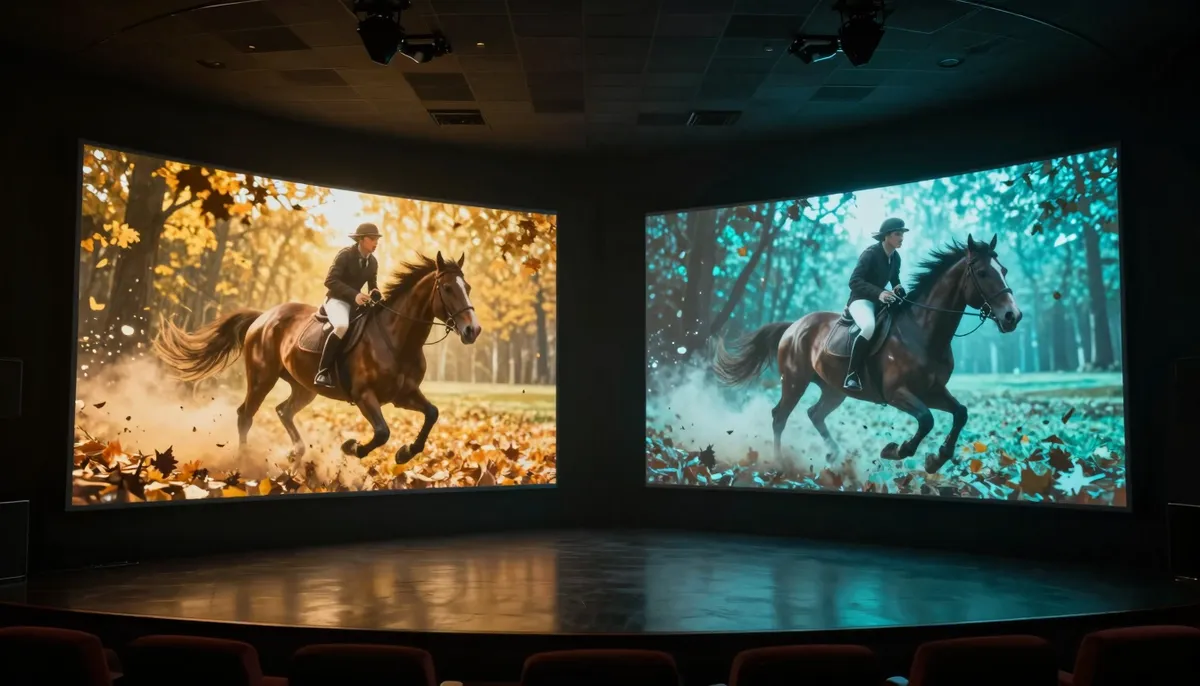
Shareable cover art summarizing the HappyHorse AI versus Kling AI decision guide.
Best use cases
Choose HappyHorse AI when you…
- Run weekly campaigns with brand references.
- Need HappyHorse-1.0 named clearly in stakeholder docs.
- Want education alongside the product experience.
Choose Kling AI when you…
- Optimize for rapid motion tests.
- Need aggressive price points for volume experiments.
- Prefer a tool known for fast short-form iteration.
Hybrid pattern
Prototype broadly. Lock prompts. Finish in HappyHorse AI when governance matters.
Use-case deep dive: ecommerce product loop
You have ten SKUs and a Friday deadline. You need a hero clip and three short cuts.
HappyHorse path: You attach stills per SKU. You reuse camera sentences. You generate in batches after creative lock.
Kling path: You explore motion styles quickly. You pick a direction. You still need a lock before final export.
Honest takeaway: Kling helps you explore. HappyHorse helps you execute with fewer identity surprises.
Use-case deep dive: performance marketing
Paid media needs many variants. Speed tempts teams to churn outputs.
You should still enforce QA. Platforms punish noisy ads.
HappyHorse angle: Document prompts so media buyers do not improvise blind.
Kling angle: Explore hooks fast. Capture winners early.
Use-case deep dive: education and demos
Teachers need clarity and repeatability. Students need guardrails.
HappyHorse angle: Pair reading with a structured web session.
Kling angle: Show fast demos, then teach discipline.
Creative prompts to try (ethical, generic)
- “Calm office morning light, slow pan, 35mm, natural color, stable geometry.”
- “Runner on a track, side tracking shot, subtle film grain, clean motion blur.”
- “Minimal kitchen counter, product center frame, soft shadows, no text.”
Adapt nouns to your brand. Avoid real people without consent.
What success looks like in week one
You ship one strong clip. You archive prompts. You teach a teammate the same path.
Success is not max tries. Success is repeatable wins.
Throughput economics: when cheap tries become expensive totals
Kling can feel inexpensive per click. HappyHorse AI can feel structured per workflow.
You should measure total spend and total hours, not vibes.
The hidden bill: unmanaged iteration
Fast tools can multiply outputs. More outputs can multiply review time.
If nobody owns QA, you pay twice. You pay in credits, then you pay in salaries.
Table: plan your burn honestly
| Cost line | What to track | HappyHorse AI angle | Kling AI angle |
|---|---|---|---|
| Credits or subscription | Monthly invoice | Map to campaigns | Map to experiments |
| Staff review | Hourly rate × hours | Lower if prompts are stable | Can rise if outputs explode |
| Rework | Re-edits after client notes | Falls when archives exist | Falls when you lock style early |
| Opportunity cost | Missed deadlines | Risk if governance is weak | Risk if chaos grows |
Replace numbers with your finance reality. The shape matters more than our example labels.
When Kling’s speed saves real money
Kling can save money when your team needs many fast rejects to find one winner.
You still need a reviewer who can kill bad ideas early. Speed without taste burns cash.
When HappyHorse’s structure saves real money
HappyHorse AI can save money when references reduce identity drift and re-shoot prompts.
You pay fewer catastrophic rounds. You also build a library you can reuse next month.
Governance guardrails (copy to your wiki)
- One style owner per brand line
- One folder naming rule for references
- One definition of done for “approved”
- One weekly archive dump to shared storage
Short list: stakeholder alignment questions
- What is our median time from prompt to publish?
- What is our acceptable artifact rate for paid ads?
- Who can stop a publish on quality grounds?
If answers do not exist, tools will not fix the gap.
Honest note on regional pricing
Promotions and currency displays change. You should read official pages in your region.
Do not trust screenshots from forums. Trust receipts and invoices.
Methodology and limitations
We publish from product experience and public patterns. We do not claim third-party lab certification here.
You should treat images as illustrative. Real results vary by prompt and post.
You should re-test after major vendor updates.
Experience
We operate HappyHorse AI workflows daily. We see how teams succeed and where they stumble.
We learn from creator communities about Kling. We do not have private vendor roadmaps.
Expertise
We focus on multimodal references, camera language, and QA habits. We write to reduce wasted credits.
Authoritativeness
We link to our blog and to happyhorse-turbo.org so you can verify product claims in context.
Trustworthiness
We praise Kling for speed and value where fair. We note governance risks for fast tools.
Reader homework
Spend thirty minutes on a real brief. Generate two HappyHorse-1.0 variants. If you use Kling, mirror the idea.
Score blind if you can. Write one lesson learned. That lesson is worth more than this paragraph.
What we will update later
We will refresh this post when major vendor releases change fair comparisons. Bookmark the date in the frontmatter.
If you quote this article internally, include the date so your team knows the context.
Mistakes to avoid
- Choosing tools based on one viral clip
- Ignoring audio until export
- Letting fast iteration bypass QA
- Mixing conflicting camera words in one prompt
Deeper mistakes (teams learn these the hard way)
- They skip brand color checks on different displays.
- They publish first good output instead of second better output.
- They never archive negative prompts that failed.
- They confuse motion energy with quality.
When to escalate to a real shoot
Use real cameras for hero talent, legal testimony, and delicate product claims.
AI helps exploration. It does not remove accountability.
Privacy, rights, and safety (plain language)
You should read vendor terms for both tools. This section is general guidance, not legal advice.
- Avoid uploading sensitive IDs or confidential documents as references.
- Respect third-party trademarks and packaging.
- Obtain consent for recognizable people.
If you operate in regulated industries, involve your counsel early.
Industry snapshots (tendencies, not absolutes)
| Industry | HappyHorse AI angle | Kling AI angle |
|---|---|---|
| Ecommerce | Reference-led product loops | Rapid variant tests |
| Performance marketing | Documented prompts | High-throughput experiments |
| Education | Clear docs and repeatable labs | Quick demos for classrooms |
Rows are heuristics. Your team culture matters more.
Operations playbook (lightweight)
Monday
Write a shot list. Freeze aspect ratio.
Tuesday
Generate two HappyHorse-1.0 variants with shared nouns.
Wednesday
If you use Kling, mirror the idea for speed tests.
Thursday
QA with two reviewers. Log failures.
Friday
Ship the approved master. Archive prompts.
What “done” means
Done means approved by the named stakeholder. Not done means pretty.
FAQ
1) Is HappyHorse AI faster than Kling?
Sometimes yes, sometimes no. Kling often feels faster for quick tries. Your measured time depends on prompts and QA rules.
2) Which is cheaper?
Pricing changes. Compare official pages. Measure cost per approved clip, not cost per click.
3) Can HappyHorse-1.0 match Kling on motion?
Often yes for many scenes. Hard motion remains hard everywhere. Test your own subjects.
4) Which tool is better for ads?
HappyHorse AI suits documented multimodal campaigns. Kling suits rapid exploration when you enforce brand rules manually.
5) Do I need both?
Some teams use both. If you do, write naming rules so files do not collide.
6) Which has better camera control?
HappyHorse AI rewards explicit camera language in a web workflow. Kling rewards fast exploration. Discipline matters more than logos.
7) What about audio?
Judge on a timeline with fair levels. Plan post-production for critical dialogue.
8) Where do I start?
Read What is HappyHorse AI. Visit happyhorse-turbo.org to try HappyHorse-1.0.
Verdict
Pick HappyHorse AI when you want HappyHorse-1.0 inside a transparent web platform with education and multimodal references.
Pick Kling AI when you prioritize rapid iteration and aggressive pricing, and you accept governance overhead.
If you want one action now, write a five-bullet shot list. Generate with HappyHorse AI. Measure minutes to approval.
Weighted scorecard (your numbers)
| Criteria (weight) | HappyHorse AI | Kling AI |
|---|---|---|
| Quality (30%) | ___ /10 | ___ /10 |
| Speed (25%) | ___ /10 | ___ /10 |
| Cost (20%) | ___ /10 | ___ /10 |
| Workflow fit (15%) | ___ /10 | ___ /10 |
| Governance (10%) | ___ /10 | ___ /10 |
Multiply and sum. Sleep on the result. Buy credits when the plan matches your week.
CTA
Open happyhorse-turbo.org and start a HappyHorse-1.0 session today.
Read the broader hub at best AI video generators in 2026.
Return home when you want the product overview.
Stakeholder questions (answer in writing)
- Who owns commercial rights to outputs?
- What regions are supported for your account?
- What export formats does post require?
- What happens if a vendor changes access overnight?
Clarity now prevents panic later.
Final reminders before you choose
You should not pick a tool because a competitor picked it. You should pick a tool because your shot list fits it.
You should measure time-to-approved-clip for two weeks. Numbers beat debate.
You should teach one colleague your workflow. Teaching reveals gaps you cannot see alone.
If you want a second opinion on the wider market, read best AI video generators in 2026. Then return to happyhorse-turbo.org with a calmer plan.